Do you need a GCN Survey?
You may need a GCN survey if your site:
- contains a pond or seasonal waterbody
- lies within 250m of a pond
- includes grassland, scrub, hedgerows or woodland edges
- has rubble piles, log stacks or damp refuge features
- was flagged during a PEA for suitable terrestrial habitat
Because GCN are a European Protected Species, planning authorities require clear evidence wherever habitat risk is identified. Early checks protect timelines, avoid seasonal delays and shape proportionate next steps.
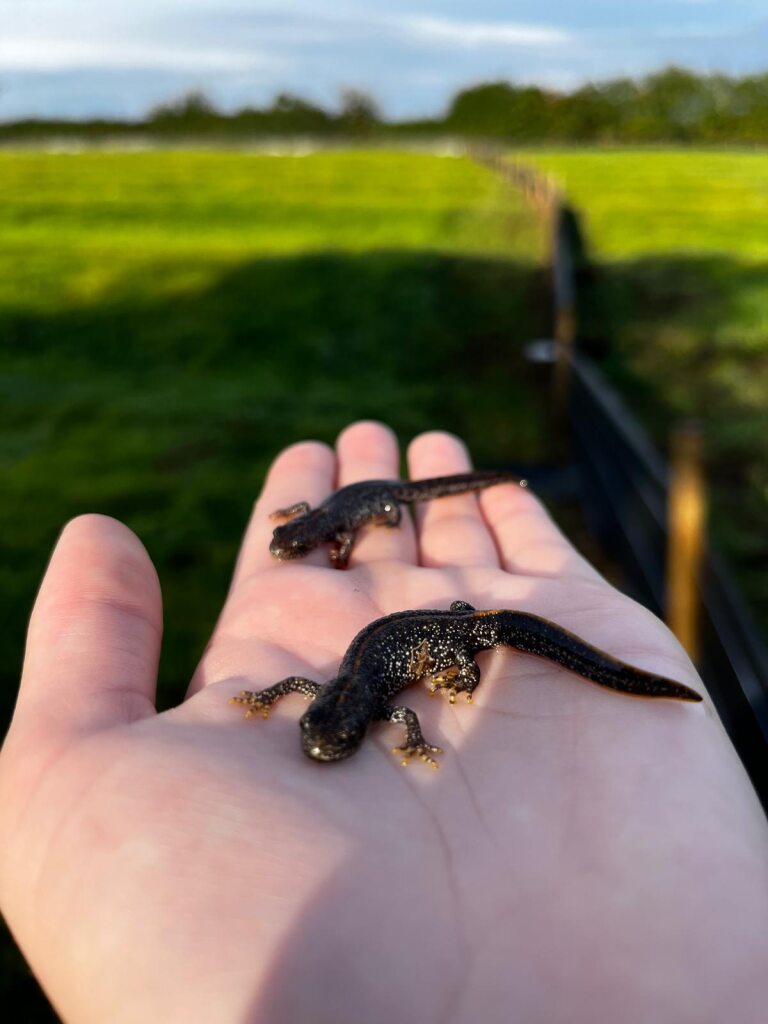
Early Signs a GCN Survey is Needed
- Pond on-site or within 250m
- PEA flagged GCN suitability
- Grassland, hedgerows, scrub, woodland edges
- Rubble piles, log stacks, terrestrial refuge
- LPA requested a GCN assessment if site is in a GCN risk zone
- Large footprints near waterbodies or ditches
If any apply, a GCN survey is usually required.
What We Deliver
| Service | Purpose | Outcome |
|---|---|---|
|
GCN eDNA Testing |
Fast presence/likely absence screening |
Clear positive/negative result |
|
Habitat Suitability Index (HSI) |
Early risk scoring |
Practical suitability rating |
|
Presence/Likely Absence Surveys |
Alternate to eDNA Testing |
Robust evidence for planning |
|
Population Surveys |
Gives an estimate of the population size |
Data for mitigation/licensing |
|
Mitigation & Licensing |
If impacts are unavoidable |
Planning-ready solutions |
How it Works

Scope & Schedule
Send the site location and timeframe. We confirm whether eDNA is eligible or if seasonal surveys are required.

Fieldwork
eDNA sampling (April–June) or multi-visit presence/absence surveys depending on need.

Reporting
Planning-ready reports, clarity for planners, and next steps for your programme.
Timing & Survey Windows
Missing the eDNA window usually means waiting until the next survey season. Early booking protects your timeline.
eDNA Testing
Mid April – June
Presence/Likely Absence Surveys
Mid March – Mid June
Population Surveys
Mid April – June
Licensing
Seasonally Dependant
What You Receive:
- eDNA results (positive/negative)
- HSI scoring
- Presence/absense or population data
- Planning-ready reporting
- Clear mitigation/licensing guidance
- Reliable timelines and next steps
Evidence for planners. Clarity for project teams.
Why Developers Choose Newt Surveys:
- Programme-first scheduling
- Planning-focused reporting
- Straight, practical recommendations
- Reliable survey capacity
- Support through licensing where required
Legal Compliance & Planning Risk
GCN surveys are required under UK law when suitable habitat exists. Missing or incorrect evidence can lead to:
- Planning refusal or validation delays
- Stop-work notices
- Enforcement penalties for disturbing GCN
- Licence requirements late in the programme
- Seasonal delays (eDNA and survey windows are fixed)
Relevant legislation includes:
- Conservation of Habitats and Species Regulations 2017
- Wildlife & Countryside Act 1981 (Schedule 5)
ProHort ensures your evidence is clear, proportionate and aligned to your build schedule.
Your Next Step
Need GCN or eDNA surveys? Let’s confirm your route and secure your survey window.
Phone: 0800 494 7479
Email: info@prohort.co.uk
Case Note
A residential site within 120m of a pond booked eDNA sampling early. Results returned in 9 days. The negative finding removed the need for multi-visit surveys, keeping planning submission on the original timeline.
GCN Survey FAQs
You may need one if your site contains a pond, lies within 250m of one, or your PEA flags suitable terrestrial habitat like grassland, scrub or hedgerows.
Yes — but only if the result is negative. A positive result normally triggers additional presence/absence surveys.
Mid April to June. Missing this window usually delays decisions until the next season.
Mid March to mid June, depending on temperature and weather.
We outline mitigation and licensing routes, including practical measures to keep the programme moving legally.
Yes. GCN presence can shape habitat creation and terrestrial provision. Early clarity helps avoid redesign.
No. Risk depends on habitat suitability, pond condition and separation features. We confirm quickly.
No. Licensing is only required where impacts on GCN or their habitat are unavoidable.
It often will. Planners require seasonal evidence before approving or validating applications.
eDNA turnaround is typically fast. Multi-visit surveys take several weeks depending on weather and method requirements.
HSI scoring, eDNA results or presence/absence data, habitat assessment and proportionate mitigation or licensing notes.
Postcode, red line plan, timeline, and any PEA or planner comments.